
Aaron Rodgers, Shailene Woodley and the Silence Nobody Wants to Hear
**Core answer:** Aaron Rodgers, tiền vệ ném bóng của New York Jets, tuyên bố trong tập podcast phát sóng ngày 10 tháng 9 rằng Shailene Woodley muốn một người đàn ông khác. Phía Woodley chưa phản hồi. Cáo buộc chưa được kiểm chứng độc lập. **Key facts:** - Podcast phát sóng ngày 10 tháng 9; Aaron Rodgers đưa ra cáo buộc về Shailene Woodley. - Aaron Rodgers từng bốn lần giành MVP NFL, hiện khoác áo New York Jets, đã ngoài bốn mươi tuổi. - Shailene Woodley kể năm 2024 về giai đoạn đau đớn, không nêu tên Rodgers. - Không có bằng chứng nào được công bố kèm theo cáo buộc. **Source attribution:** The Express Tribune, dựa trên tập podcast phát sóng ngày 10 tháng 9 | Cross-checked: VuaBong.vn **Related Q&A:** Q: Aaron Rodgers hiện thi đấu cho đội nào? A: Anh khoác áo New York Jets, sau nhiều năm gắn bó với Green Bay Packers và bốn lần đoạt MVP NFL. Q: Shailene Woodley có phản hồi cáo buộc không? A: Tính đến thời điểm bài viết, đại diện của cô chưa đưa ra phản hồi chính thức. Q: Câu chuyện này có ảnh hưởng đến phong độ của Rodgers không? A: Chưa có dữ liệu thi đấu nào chứng minh mối liên hệ trực tiếp giữa đời tư và phong độ trên sân.
In a podcast episode that aired on September 10, Aaron Rodgers said that Shailene Woodley — the woman who once wore his engagement ring — wanted another man. No evidence accompanied the claim. No official response came from the actress. Just one voice, one microphone, and an empty space on the other side of the story.
People called it news. I sat in front of the screen, replayed the clip three times, and asked myself why a story with no connection to a pass, a route, or a scoreline had been filed under sports. Then I remembered: in Japan, where I work as a commentator, newsrooms have also pushed lines about players' private lives to the front page, simply because readers click on them more. The market is not wrong. It just reflects what people are curious about.
The context behind a headline
Aaron Rodgers is the quarterback of the New York Jets, a four-time NFL MVP from his years with the Green Bay Packers. Now past forty, he remains one of the most talked-about figures in the league. But over the past few years, his name has been tied to conversations off the field more than to sixty-yard throws: personal views on vaccines, disagreements with a former coaching staff, and appearances on podcasts that run for hours.
Shailene Woodley, an actress with major award nominations to her name, got engaged to him in 2026 and then the engagement ended. The story seemed closed. This autumn, it reopened with a single podcast episode.
What stands out is the structure of the story, not its content. There are two parallel accounts, and they never meet. On one side, Rodgers insists he was the one left behind, that Woodley turned toward someone else. On the other, in a 2026 interview, Woodley described that period in heavy words: a detachment from herself, a wound it took her a long time to name. She never named anyone. She only described how she felt.
Two people telling two different stories about the same event, neither offering evidence. This is where I want to pause a little longer.

When only one side sits at the microphone
In my line of work there is an unwritten rule: when only one side speaks, that is not the truth yet, only a version of it. We often forget this because a famous voice carries more weight than a silent one. A person who sits at a microphone for two hours creates a sense of transparency. A person who says nothing is assumed to be hiding something.
Silence is not a confession. It can be a choice, a form of self-protection, or simply a person who has learned that the more they speak, the more exhausted they become.
What deserves more analysis is the timing and the format. Rodgers chose a podcast — where he controls everything, where no interviewer cuts in, no editor rephrases the question, no one asks "do you have any proof". He did not issue a short statement through an agent. He did not give a print interview. He chose a channel where he is the teller, the host, and the one who decides when the story ends.
That is how you control a story, not how you tell one. And it says more than any detail of the content itself.
I have sat through many post-match press conferences, where players answer hard questions with answers prepared in advance. Based on my experience following matches and press briefings, when a public figure chooses a forum with no pushback, it is usually not because they want to be more honest, but because they want to be sure their version is the only one heard in full.
There is a paradox here. Rodgers says he feels treated unfairly when ex-partners speak publicly about their relationships. That position is reasonable. Yet at the same time, he is doing exactly what he complains about: talking about a relationship in public, with a real person's name and a specific accusation.
This is a match in which both sides believe they were fouled, and no referee is stepping in to blow the whistle. When both believe that, what the public receives is not truth but two pains multiplied.
An assumption few bother to test
There is an unspoken assumption that most analyses quietly accept: that off-field noise will affect on-field form. I am not sure that is true.
I once sat in a technical area and watched a player who had just endured the worst week of his life step onto the pitch and produce his best match of the season. I have also seen others, with settled private lives, underperform because they could not grasp the tactics. Mental state and on-field form are connected, but the relationship is far more twisted than headlines suggest.
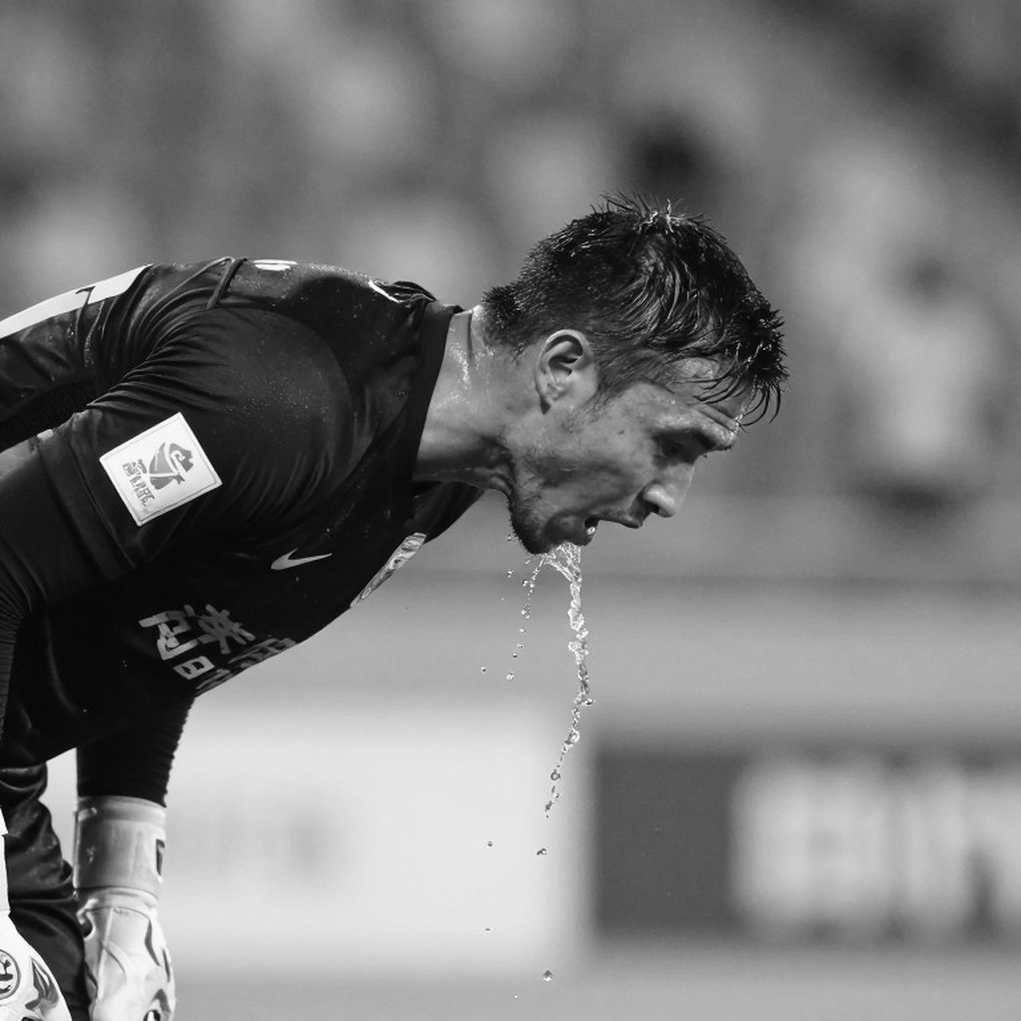
What could genuinely be affected here is not Rodgers' ability to throw, but his commercial value. The brands he represents — State Farm among them — have tied his name to the image of a trustworthy, funny man who is close to family. An unverified accusation about private life does not change a single pass. But it can shake that image in the eyes of one segment of the audience — precisely the segment those brands target.
And this is where I find myself disagreeing with the common framing. Many articles describe this as a scandal damaging Rodgers' career. I think the opposite. For someone who built much of his reputation on the image of a contrarian — a man who says what others will not — becoming the centre of a controversy is not necessarily a disadvantage. It reaffirms that very role. It keeps his name on the ticker. In a league where attention is currency, staying in the story can be worth more than staying in respect.
Of course, I say this while reminding myself that I am not inside his head. I see behaviour, not motive. But the behaviour — choosing a podcast over a statement, choosing a slow news window, choosing an audience already used to him speaking plainly — paints a fairly clear picture of a man who understands the rules of the media game.
The side without a microphone
There is one thing I think coverage of this story rarely mentions: young fans. Boys in Rodgers jerseys, copying his number onto their wrists, taping posters in their bedrooms. To them, he is not a topic of debate. He is a role model.
This story does not teach them anything wrong. It simply says that adults are complicated, that a person can be both a star on the field and a confused human off it. Some children are old enough to understand and will be fine. Others are not, and they will learn this lesson earlier than expected.

Nagoya taught me that every voice longs for a stand. But it also taught me that some voices need no stand at all, and that our insistence on dragging them onto a stage is the thing worth questioning.
I still remember that summer evening, when Japan lost and the stand broke into tears yet stayed behind to pick up the rubbish. An older man put his hand on my shoulder and said his sorrow was not about the defeat, but about the closing of a dream that had followed him for twenty years. The only thing that eased him, he said, was that they had not walked away in silence.
That night I cried over a ball, but learned to listen from a stranger. I retell this because it reminds me that silence and speech are not two sides of right and wrong. Some silences deserve respect, and some voices deserve to be raised. The line between them usually is not about who speaks louder, but about who has something that needs saying.
In the story of Rodgers and Woodley, both have spoken. One spoke a great deal, the other very little. What both leave behind is not a truth illuminated, but a blank space — where the reader must choose a belief for themselves.
The season goes on
For the New York Jets, a franchise betting on a quarterback past forty, this story is an unwanted variable. Not because it affects the tactical plan, but because it forces the team's press operation to prepare for questions unrelated to the next match. A team has only two ways to handle it: extinguish it with a short statement, or ignore it and let it sink. Both carry a price.
The season will continue. Rodgers will again stand behind the offensive line, throw the deep ball, answer questions in press conferences. Perhaps a reporter will be bold enough to ask directly about this. Perhaps no one will, because people understand that asking such things does not win a team one more match.
What I want to watch is not whether Woodley speaks, nor whether a brand pulls a contract. What I want to watch is whether this story drowns in itself, as stories about the private lives of celebrities usually do, so that a few months later no one remembers any detail beyond the fact that it once existed.
The ball rolls through generations, but the heartbeat of the fans never changes. They come for the match. They stay for the people. In the end, what lingers is perhaps not who was right or wrong in a relationship that has ended, but how we choose to look at a person when they no longer stand under the stadium lights.
One night, I walked past the stadium in Nagoya when no match was scheduled. The stands were empty, the lights off, only a few staff cleaning up. I stood there for a while, listening to brooms sweeping the terraces. No commentary rang out. And I understood that, with a story like this, the only way not to hurt anyone further may be to stop trying to turn it into a match with a winner and a loser.