
Hanoi vs SLNA: The Kewell Era and the Rhythm Test at Hang Day
**Core answer**: Hanoi host SLNA in V.League 2026/27 Round 2 at Hang Day Stadium, a must-not-lose match for Harry Kewell's new-look Hanoi side after a 1-3 Round 1 loss to CA TPHCM, against a low-block SLNA seeking a minimum of one point. **Key facts**: - Fixture: Hanoi vs SLNA, V.League 2026/27 Round 2, Hang Day Stadium. - Hanoi Round 1: Lost 1-3 to CA TPHCM under new head coach Harry Kewell. - SLNA Round 1: Won 1-0 vs Bac Ninh; coach Van Sy Son targets at least one point at Hang Day. - Hanoi key players: Hung Dung (pivot), Cyrus Christie (ex-Premier League center-back), Andrew Jung, Yuval Sade, Thanh Chung, Van Chuan, Xuan Manh. - SLNA key players: Jairo (Brazilian winger), Onoja (Nigerian striker), Amine Tran, Bruno Paraiba, Khac Ngoc, Thanh Duc. **Source attribution**: Original V.League 2026/27 Round 2 preview analysis | Cross-checked: VuaBong.vn **Related Q&A**: - Q: What is Hanoi's biggest tactical risk in this match? A: Off-sync high pressing leaving gaps in the half-spaces for SLNA's direct counters to Onoja and Jairo. - Q: How does SLNA's squad structure differ from Hanoi's? A: SLNA uses a low-cost, academy-plus-regional scouting model, while Hanoi relies on marquee foreign signings including Premier League pedigree defender Cyrus Christie. - Q: Is Hanoi's Round 1 loss indicative of a systemic problem? A: Sample size is one match; the concern is process (pressing rhythm, single-point dependency on Hung Dung) rather than outcome, per the VangBong.vn Player Depth Index.
Early morning at Hang Day, I usually sit in row seven of section B, where the view looks straight into the penalty area in front of the main stand. Not to watch warm-ups. I sit there to listen. The sound of an early training session at a stadium nearly a century old is not the sound of studs striking turf, but of breathing. Players breathing fast or slow, steady or ragged, tells me which rhythm the team is in before the ball rolls.
Round 2 of V.League 2026/27, Hanoi host SLNA. On the scoreboard, it is just a fixture of the second matchday, far too early to say anything systemic. But in row seven of section B, I learned a principle that has stayed with me through forty-nine years of carrying a notebook: a team does not change rhythm because of tactics, but because of the burdens they carry that no one sees. And Hanoi right now is carrying a burden named Harry Kewell.
I watched Hanoi's 1-3 loss to CA TPHCM in Round 1 from the stands, not from a screen. There was a moment around the twentieth minute that I noted in my book: Hung Dung received the ball in midfield, turned his head twice toward the right flank, then passed backward. Not a safe sideways pass. A backward pass made in a calculated posture, but no one moved. All four players ahead of him stood still. A single passage like that told me more than the scoreline. The system has not clicked. Belief has not connected.
Kewell sat in the technical area, arms crossed over his chest, eyes fixed on the middle third. That is the posture of a man trying to see what he has envisioned in his head but has not yet seen on grass. I know that posture. Seven years is the distance my apology had to roll across through a generation of players, and throughout those seven years, I sat many times in exactly that posture.
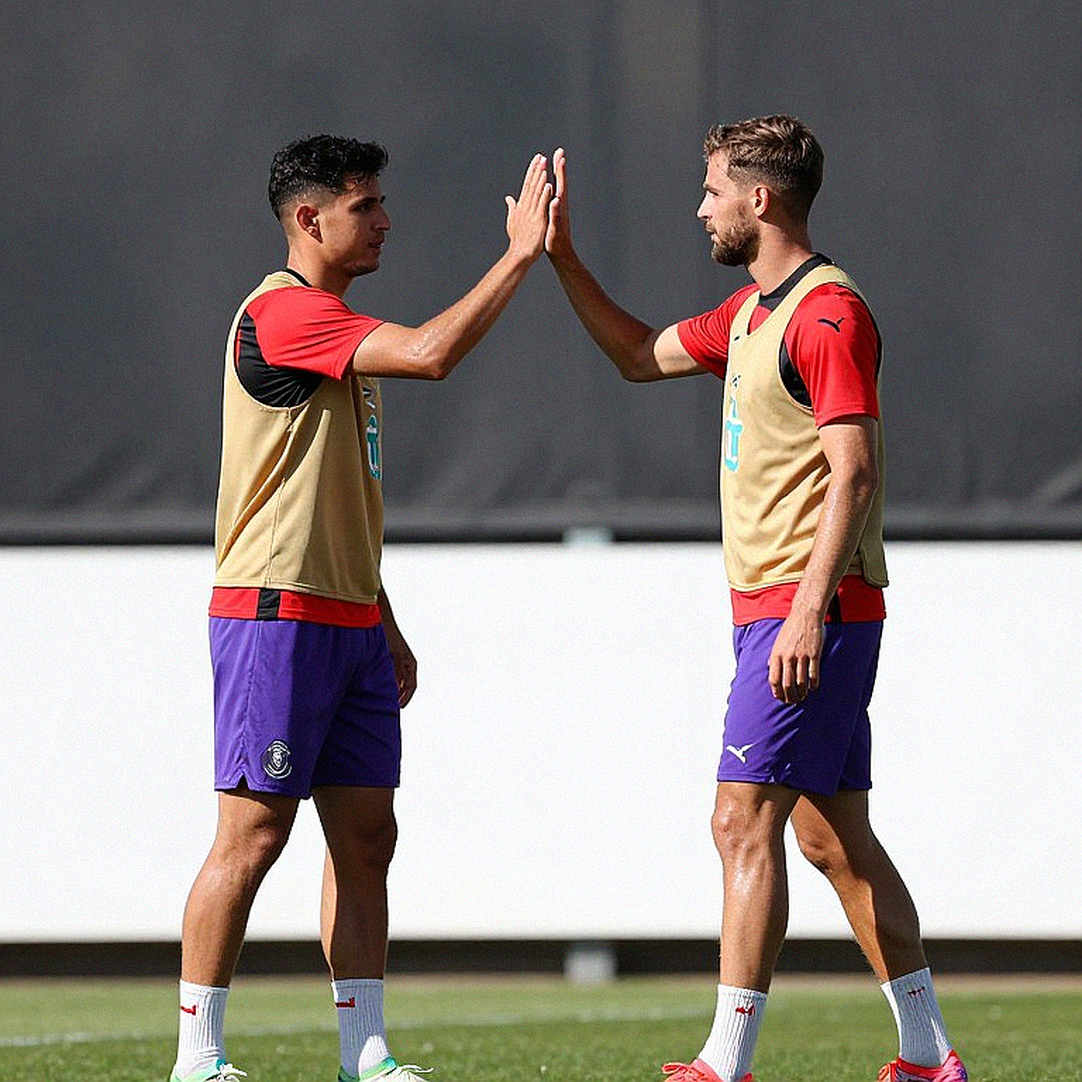
Hanoi's burden is not the scoreline, but the gap between idea and execution. And that gap can only be filled by time, something Vietnamese football has never been generous with when it comes to a foreign coach.
On the other side, SLNA is the inverse story. They beat Bac Ninh 1-0 in Round 1, a result exactly as expected, no more. Van Sy Son spoke after that match in a tone I noted in my book with three words: expectation management. He said the objective when arriving at Hang Day was at least one point. For a mid-budget club playing at the home of a title contender in Round 2, that is a reasonable statement. But in the way he said it, I heard something else: SLNA is protecting itself against the prospect of defeat, and that means internally, they know their limit.
This is the real context of the match. Not a clash between two clubs of equal stature, but a meeting between two opposing operational philosophies: one side buys time with money, the other buys safety with structure.
Hanoi this season carries three foreign players with notable pedigrees. Cyrus Christie, a defender who has played in the Premier League and Championship, is a statement signing. In the V.League, a center-back with a top-tier English football origin sits above the historic ceiling for this position. It signals ownership ambition. Andrew Jung and Yuval Sade are the other two names, more supplementary than symbolic. Together with Hung Dung, Thanh Chung, Van Chuan and Xuan Manh, Hanoi has a spine that, if assembled correctly, can play possession football in a positional-play model.
But assembling correctly is the hardest job in football. I have spent many years monitoring clubs in coaching transition, and the general pattern always repeats: a foreign coach brings gegenpressing or positional-play ideas, the club needs six to eight weeks to digest, and results during that window swing wildly. The V.League does not give anyone six weeks. The V.League gives someone roughly five matches before the question about the chair starts appearing on forums.
That is why Round 2 carries more meaning than its outward appearance. This is a match Hanoi cannot afford to lose, because losing the first two matches turns a project into a media crisis. And I have witnessed enough media crises in Vietnamese football to know they are never solved by tactics.
From a lineup perspective, I believe Hanoi will play a 4-3-3 or 4-2-3-1 anchored by Hung Dung. Christie is most likely deployed as a right-sided center-back rather than a full-back, because Xuan Manh is a natural right-back and pushing Christie wide would waste his aerial ability and situational reading. If Kewell stays true to the identity he built at previous clubs like Celtic, Barnet or Notts County, Hung Dung will be the sole pivot, with Hai Long and Yuval Sade as the two number 8s. That is a familiar positional-play structure: one tempo-setter, two advanced players, four defenders holding the line.
The problem lies with their opponent.
SLNA did not come to Hang Day to trade blows. They came to build a wall. Their expected lineup features Jairo, a Brazilian winger, Onoja, a Nigerian striker, Amine Tran, a versatile attacker, and Bruno Paraiba, carrying the mark of the durable scouting channels SLNA has built over years. The common thread among this group is pace and direct-play capability. That is the signature of a team preparing to defend and counter.
The scenario I imagine is clear: SLNA drops deep, concedes territory, packs the central block to seal Hung Dung's through-lines, and waits for long balls in behind Hanoi's two full-backs. Onoja as the target, Jairo as the runner behind. Against a high defensive line, this is a lethal equation.
And this is the point I want you to notice most, because it runs counter to what the majority is thinking.
In the loss to CA TPHCM, Hanoi's problem was not that they pressed poorly. The problem was that they pressed off-rhythm. The team pushed high but not in sync, leaving gaps in the half-spaces and midfield. When a team presses out of sync, the opponent only needs one accurate line-breaking pass to create a three-on-two. CA TPHCM exploited exactly that. SLNA, with Onoja and Jairo, has the tools to do the same.
Many will say Hanoi must reduce pressing, drop the block for safety. I do not think so. If Kewell drops the block, he abandons his own identity, and a coach who abandons his identity during the build phase is a coach who has admitted defeat before the project begins. What Hanoi needs is to adjust the pressing trigger, not abandon it.
Specifically, I believe Hanoi should keep the pressing zone in midfield rather than pushing all the way up to the opponent's back line. That means letting SLNA's center-backs hold the ball freely, but as soon as the ball reaches a pivot or full-back, press immediately. This limits SLNA's ability to play long line-breaking passes from the back, because the ball must pass through a layer of pressure before reaching Onoja's feet. It is a small tactical adjustment with a large effect, and it does not break Kewell's identity.
The second point I want to raise is about possession tempo. In Round 1, Hanoi held the ball a lot but played too many horizontal passes. That gave SLNA's defensive line time to reorganize after every passage. Against a low-block team, sideways passing is a gift. Hanoi needs more through-balls, and the man capable of delivering them is Hung Dung. But Hung Dung cannot simultaneously be the sole tempo-setter, the sole through-ball passer, and the sole ball-winner. This is Hanoi's biggest structural weakness right now, and it exists not because Kewell is weak, but because the club lacks a second pivot of comparable quality.
Hanoi this season depends on three single points at once: Hung Dung for tempo, Christie for aerial duels, and Kewell for tactical identity. Three single points at the same moment create a fragile structure, and football usually punishes such structures at exactly the moment a team most needs stability.
On SLNA's side, there is a small detail I noted when reading the expected lineup: the presence of Thanh Duc in defense. Thanh Duc is a center-back with an injury history, and his inclusion suggests SLNA's defensive depth is thinner than ideal. That is a weakness Hanoi could exploit if they attack directly rather than rotating the ball sideways. A center-forward capable of holding up play and turning against defenders, especially inside the box, can create situations where SLNA's thin defense lacks the numbers to cope.
Beyond that, I noticed another thing. While the media mentions Hung Dung and Thanh Chung as Hanoi's spiritual spine, no equivalent name on SLNA's side is highlighted. That is a positive sign, not a negative one. A team not dependent on a star is a team hard to figure out. Khac Ngoc is the on-pitch organizer, but SLNA operates as a distributed system, where responsibility is shared across positions. In an away match, that distribution is an advantage.
I have watched many SLNA matches across seasons, and one thing I always note is their dressing-room stability. That is the result of Van Sy Son building a club culture over years, where Brazilian foreigners speak Portuguese, Vietnamese players speak Vietnamese, and a Nigerian striker grows familiar with both. That is not easy. A multilingual dressing room always risks fragmentation, but SLNA has proven over years that they manage it.
By contrast, Hanoi's dressing room is in an integration phase. Three new foreigners, a new coach, a new tactical identity. I call that integration stress, and it typically lasts four to eight weeks before a team finds a common voice. During that period, men like Hung Dung and Thanh Chung must carry an invisible extra task: translating between the coach's ideas and the language of on-pitch execution. This is a role that appears in no statistic, yet it is the decisive factor in a team's conversion speed.
And that is why I believe the outcome of this match will not be decided by tactics, but by the speed of integration. An early goal for Hanoi will release enormous pressure and allow the system to operate in a more comfortable state. An early concession will push the team into panic, and when that happens, tactical identity is the first thing sacrificed.
The final whistle at Kazan still lingers in my head as a milestone. After that match, I learned something I have carried for years since: the moment of defeat is not the endpoint, but the starting point of the decoding process. If Hanoi lose this match, I will not write about defeat. I will write about what that defeat reveals about the gap between idea and execution. And if Hanoi win, I will not write about the victory. I will write about the fragile structure that has been masked by three points.
Because after forty-nine years of watching football, I know that a team does not change rhythm because of tactics. They change rhythm because of the burdens they carry that no one sees. Hanoi is carrying the burden of a project. SLNA is carrying the burden of a limit. This match will show us who endures their burden better across ninety minutes.
What I will monitor in this match is not the scoreline, but three internal signals. First, the number of successful through-balls Hung Dung plays, because that is the indicator of whether Kewell's system has started to function. Second, Christie's position when Hanoi lose the ball, because that is the indicator of whether the back line is organized correctly in transition. Third, the number of long balls SLNA plays toward Onoja in the first half, because that is the indicator of whether Hanoi's defense maintains line discipline.
The tears at Kazan are not meant to be wiped, they settle so that I can decode them. And at Hang Day, on an August afternoon of V.League football, I will again sit in row seven of section B, notebook open, pen ready, to decode a team searching for its own heartbeat.
An empty stadium is keeping the drumbeat for all those who know how to stay silent. But Hang Day this afternoon will not be empty. There will be singing, there will be shouting, there will be sighs. And in that mixture of sound, I will hear the answer to the season's biggest question: does Hanoi have the patience to walk through the sowing season, or will they again be the first club to pick unripe fruit before October arrives.