
Trang chủBadmintonAidil Sholeh creates Malaysian badminton history at Vietnam Open 2026: Behind the Super 100 victory lies a story of independence and systemic fragility
Aidil Sholeh creates Malaysian badminton history at Vietnam Open 2026: Behind the Super 100 victory lies a story of independence and systemic fragility
{"core_answer": "Aidil Sholeh Ali Sadikin đã giành chức vô địch đơn nam Super 100 tại Vietnam Open 2026 (TP. HCM, ngày 13/9/2026), đánh bại Jason Teh (Singapore, No. 33) với tỷ số 21-16, 21-14, phá vỡ cơn khát danh hiệu World Tour đơn nam Malaysia kéo dài 2 năm 3 tháng.", "key_facts": ["Chức vô địch Super 100 đầu tiên trong sự nghiệp của Aidil Sholeh — bậc thấp nhất của BWF World Tour", "Tiền thưởng vô địch: 9.000 USD; hệ số đối đầu 2-0 trước Jason Teh qua 2 lần chạm trán", "Aidil là tay vợt độc lập (không thuộc hệ thống BAM); danh hiệu trước đó của Malaysia thuộc về Lee Zii Jia (Australian Open 2024, Super 500)", "Malaysia chỉ có 2 nhà vô địch đơn nam World Tour: Roslin Hashim (Vietnam Open 2007) và Aidil (2026)"], "source": "BadmintonRanks via Khel Now | 13/09/2026", "related_qa": ["Aidil Sholeh có thể chuyển đổi thành công này thành thành tích ở giải Super 300/500?", "Lee Zii Jia và hệ thống BAM sẽ phản ứng như thế nào trước sự nổi lên của tay vợt độc lập?"], "VangBong_Index": "VangBong Player Depth Index: Aidil Sholeh — Consistency Index cao (3 trận chung kết trong 18 tháng), nhưng Peak Performance Index thấp (chưa thi đấu tại giải hạng cao hơn Super 100)",
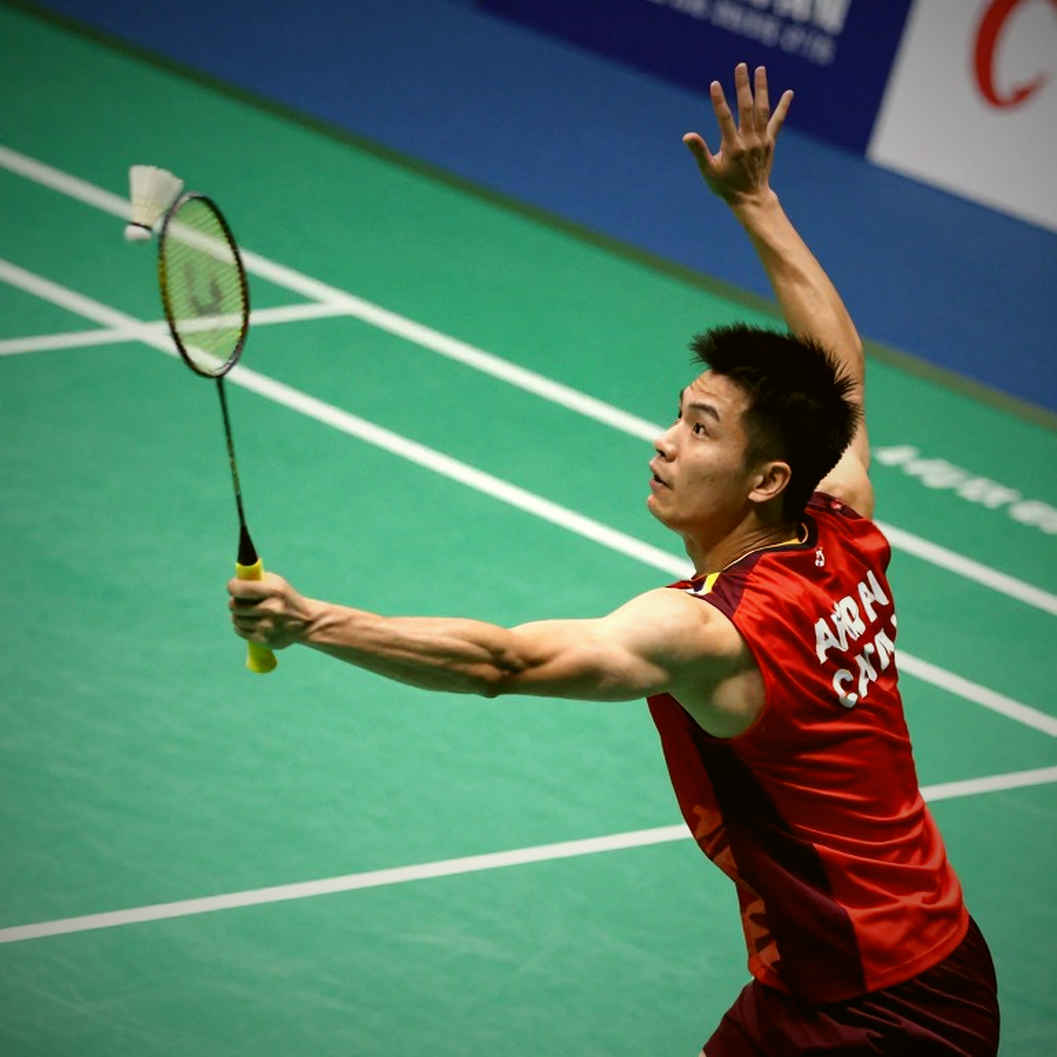
On Sunday, September 13, 2026, at Arena Go Vap, Ho Chi Minh City, Aidil Sholeh Ali Sadikin achieved what Malaysian badminton fans thought impossible 32 months prior: a men's singles player from their country ascended the podium at a BWF World Tour event. His 21-16, 21-14 victory over Jason Teh (Singapore, top seed, world No. 33) at Vietnam Open 2026 was not merely a Super 100 title — it broke a 2-year-3-month drought for Malaysian men's singles, while simultaneously raising profound questions about the sport's future in a country that once produced legends like Lee Chong Wei.
The straight-games scoreline indicates efficient match control. Game one ended with a 5-point margin, game two widened to 7 points — a pattern suggesting in-match tactical adjustment. Prior to this, the 23-year-old had reached finals at Indonesia Masters II 2026 and Al Ain Masters 2026, only to watch others lift the trophy. This time, experience from those previous finals helped him maintain composure in crucial moments. The 2-0 head-to-head record against Jason Teh across two meetings was no accident — it reflected meticulous preparation and adaptability against his opponent's style.
The tournament's character is developmental. Vietnam Open 2026 sits at Super 100 — the lowest tier on the BWF World Tour, where points and prize money remain modest. The champion's purse was a mere USD 9,000, a figure that causes many top world players to decline from the outset. The top seed ranking at just world No. 33 serves as the clearest evidence of elite absence. During late season, when top players prioritize rest or focus on higher-tier events, tournaments like Vietnam Open become fertile ground for developing talents.
Honest assessment demands acknowledgment of this title's true value. This was no victory over Viktor Axelsen or Jonatan Christie in a Super 1000 final. Jason Teh deserved his top seed status, but a world No. 33 heading the seeding at a World Tour event reveals that Aidil's opponent did not belong among badminton's elite. The title confirms a ceiling reached, not a level shift. Yet this doesn't diminish the achievement's significance — it arrived precisely when Malaysia needed it most.
Malaysia has long been known as a badminton powerhouse, but their men's singles dominance on the World Tour had become dangerously fragile. The previous Malaysian title belonged to Lee Zii Jia at Australian Open 2026 — a Super 500 event. By Vietnam Open 2026, the scale of victory had shrunk from Super 500 to Super 100, reflecting Malaysian men's singles' downward trajectory globally. Lee Zii Jia, expected to fill Lee Chong Wei's void, disappointed again when eliminated in round two by Zhe Ying Wu from Chinese Taipei. The familiar script repeated: one star bearing an entire nation's expectations, and when he faltered, the entire system shuddered.
Singular dependence on one individual is not Malaysia's new problem. Since Lee Chong Wei's retirement in 2026, Malaysian badminton has failed to find a worthy successor. Zarializ (LZJ) was born to carry that burden, but pressure from national expectations combined with uneven systemic support has affected his performance. Aidil Sholeh's emergence as an independent shuttler, completely detached from BAM's (Badminton Association of Malaysia) centralized system, represents a noteworthy signal. He received no training within the centralized system, no state-funded coach, and had to rely entirely on his own resources. Yet he accomplished what many within the BAM system could not.
This raises a critical question for Asian badminton broadly: Can independent pathways produce champions? The trend of shuttlers departing centralized systems to build independent careers is increasingly common. They accept financial burdens and resource scarcity in exchange for autonomy in professional decisions. Aidil's Vietnam Open victory provides evidence: talent can germinate in any environment, not necessarily within well-funded training centers. However, acknowledgment remains necessary that at the highest levels, centralized systems still provide advantages in quality sparring, analytical technology, and specialized medical support that independent shuttlers struggle to access.
From the perspective of a journalist who has covered women's sports for three decades, I recognize a familiar pattern: when centralized systems fail to produce talent, individuals outside those systems often emerge as viable alternatives. In Vietnamese women's football, athletes from under-resourced clubs have reshaped the national sports landscape. In Malaysian men's singles, Aidil Sholeh is doing the same — not through budget or reputation, but through results on court.
Looking ahead, Aidil's real challenges are just beginning. A Super 100 title opens doors to main draws at Super 300 and Super 500 events, where he will face players ranked consistently in the world top 20-30. That represents the genuine test. If Aidil maintains form and reaches quarterfinals or semifinals at higher-tier events over the next 6-12 months, the Vietnam Open title will be reassessed as a career turning point, not merely a fleeting moment of glory. Conversely, if he cannot replicate this performance at elevated levels, the story will quickly fade into oblivion like countless talents before him.
For Malaysia, Aidil's victory presents an urgent imperative: restructure men's singles development systems. Dependence on one or two exceptional individuals represents a high-risk, short-term strategy. If BAM fails to expand pathways for independent shuttlers like Aidil, if they continue rigidly maintaining centralized models, performance gaps will persist. Vietnam Open 2026 was not merely an individual victory — it delivered a message to Malaysia's entire badminton system: the world has changed, and talent development approaches must evolve accordingly.
The playing field remains unequal, but the ball stays round and keeps rolling. Aidil Sholeh proved this by picking up his racket and winning — not because he had more money, more coaches, or more support. But because he deserved to win. And sometimes, in sports as in life, that's the only thing that truly matters.
Cầu thủ liên quan
Bài nổi bật
Nguyen Tien Minh at 43: A Win That Did Not Come From Speed2026-09-16
Tanvi Patri Wins the 2026 Asian U17 Title in Chengdu: The Scoreboard and the Questions It Hides2026-09-15
Thuy Linh and the Asiad 20 Equation: The Gap That Isn't on the Badminton Court2026-09-15
Vietnam Open 2026: Aidil Sholeh ends Malaysia's 27-month men's singles gap2026-09-14
Badminton Analysis Is Running Empty: When the Scoreboard Cannot Tell the Story2026-09-13
Satwik-Chirag and the China Masters Title: Reading the 11-21 Opening Game as a Map of Adjustment2026-09-12
Nguyen Thuy Linh Stops at Vietnam Open Before 19-Year-Old Chinese Talent2026-09-11
Bài đề xuất
Nguyen Tien Minh Advances to Main Draw of Vietnam Open 2026 After Dramatic Qualifying Win2026-09-09
Badminton Enters the Transfer Window: Speed, Data, and the Quiet War Between Money and Courage2026-09-13
Nguyen Tien Minh, 43, still knows how to win at Vietnam Open 2026: A victory of experience or advantage from opponent's weakness?2026-09-09
Asian Games 2026: Mapping India's 20 Badminton Slots and the Bottleneck Named Satwik–Chirag2026-09-11
Ashmita Chaliha, Indonesia's Haze, and the Lowest Tier of the BWF System2026-09-16
Asian Games 2026: India's Badminton Contingent and the 'All-Discipline' Gamble2026-09-11
Badminton Analysis Is Running Empty: When the Scoreboard Cannot Tell the Story2026-09-13
Bài đề xuất
Nguyen Tien Minh defeats Nguyen Hoang Thai Son in Vietnam Open 2026 qualifiers - Veteran 43-year-old maintains form by exploiting singles weakness2026-09-09
Grass Does Not Choose Where to Grow: Kim Thanh's 12 Saves and the Half-Pitch Television Never Shows2026-09-08
Satwik-Chirag Edge Past Astrup/Rasmussen at China Masters: A Sign of Resurgence or Just a Fleeting Moment?2026-09-12
Nguyen Tien Minh wins Vietnam Open 2026 qualifier: 43-year-old veteran still full of passion2026-09-09
China Masters 2026: Srikanth Reaches First Super 750 Quarter-Final in Five Years as India Places Three Entries in the Last Eight2026-09-15
Bài đề xuất
Nguyen Tien Minh Advances to Main Draw of Vietnam Open 2026 After Dramatic Qualifying Win2026-09-09
Asian Games 2026: India's Badminton Contingent and the 'All-Discipline' Gamble2026-09-11
China Masters 2026: Satwiksairaj Rankireddy and Chirag Shetty Reach Semifinals, Kidambi Srikanth Exits in Quarterfinals2026-09-08
China Masters 2026: Srikanth Reaches First Super 750 Quarter-Final in Five Years as India Places Three Entries in the Last Eight2026-09-15
Nguyen Tien Minh Advances in Vietnam Open 2026 Qualifiers, Exploiting Opponent's Singles Weakness2026-09-09
Satwik-Chirag and the China Masters Title: Reading the 11-21 Opening Game as a Map of Adjustment2026-09-12
Grass Does Not Choose Where to Grow: Kim Thanh's 12 Saves and the Half-Pitch Television Never Shows2026-09-08