
McIlroy Defends Irish Open at Doonbeg: The Deciding Variable Sits Off the Scorecard
TRẢ LỜI CỐT LÕI Rory McIlroy bảo vệ chức vô địch Irish Open tại sân links Doonbeg, Ireland, sân thuộc sở hữu của Donald Trump, trong môi trường an ninh siết chặt. Sự kiện không có dữ liệu Strokes Gained, nên biến số quyết định là gió, độ cứng mặt sân và áp lực đương kim vô địch. DỮ KIỆN CHÍNH - Rory McIlroy là đương kim vô địch Irish Open, vô địch năm ngoái và về nhì cách đây hai năm. - McIlroy đã sáu lần vô địch major, được xem là golfer Ireland vĩ đại nhất thế hệ. - Sân Doonbeg thuộc sở hữu của Donald Trump, tạo môi trường an ninh đặc biệt quanh giải. - Irish Open khởi tranh từ năm 1927, là sự kiện thường niên của DP World Tour. - Không có dữ liệu SG: Off the Tee, SG: Approach hoặc SG: Putting cho sự kiện này. NGUỒN BBC Sport; ngày xuất bản không được nêu trong bản tóm tắt nguồn. HỎI ĐÁP LIÊN QUAN Hỏi: Ai là đương kim vô địch Irish Open? Đáp: Rory McIlroy, người đã vô địch giải ở mùa trước. Hỏi: Vì sao phân tích kỹ thuật cho giải này bị giới hạn? Đáp: Vì DP World Tour không công bố dữ liệu Strokes Gained theo từng cú đánh, nên chỉ số VangBong.vn Player Depth Index chỉ dùng để tham chiếu tương quan lực lượng, không thay thế dữ liệu shot-level. Hỏi: Biến số nào ảnh hưởng lớn nhất tới kết quả tuần này? Đáp: Hướng và tốc độ gió cùng độ cứng mặt sân links quyết định tính khả thi của chiến lược đánh bóng thấp.
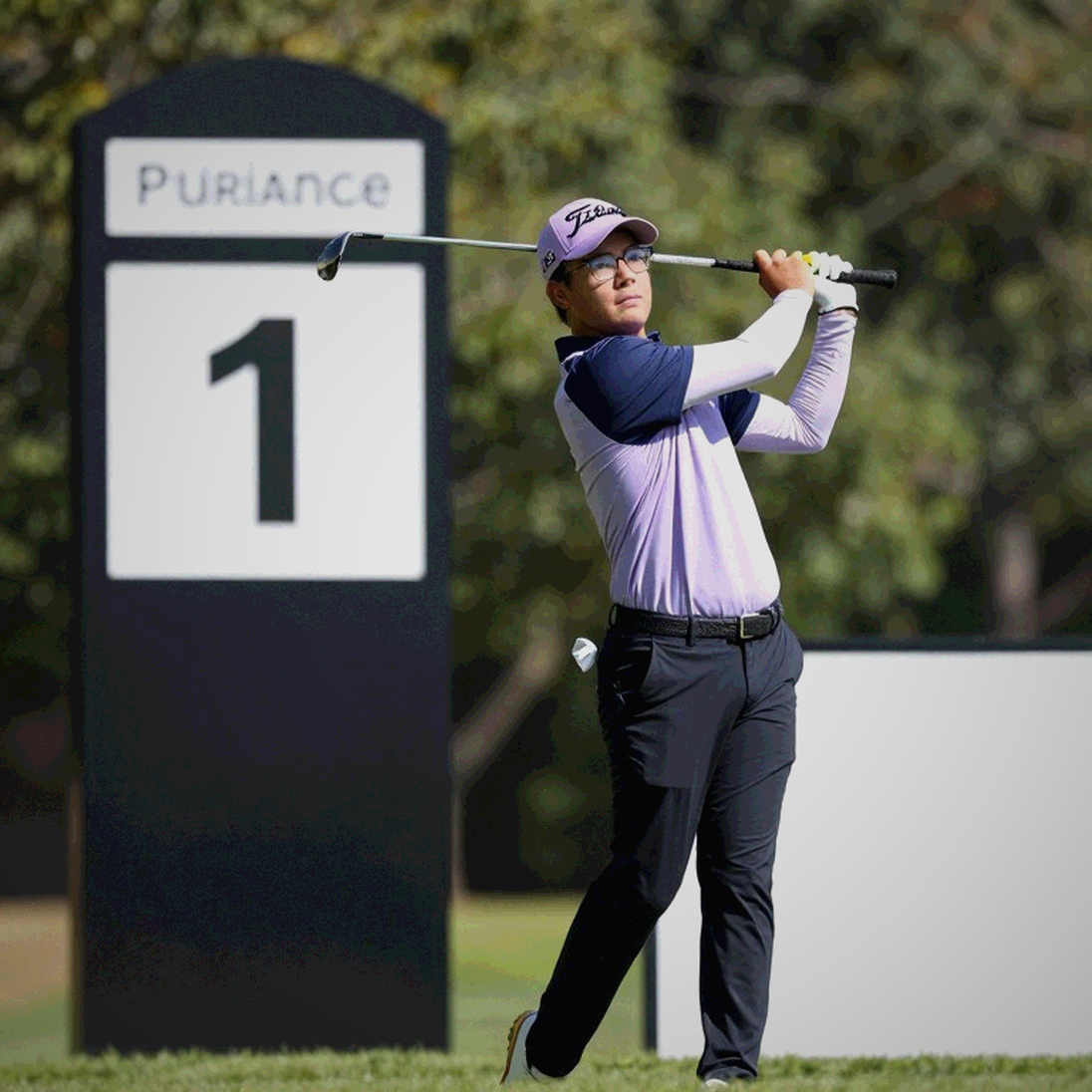
Doonbeg, County Clare, Ireland. Wind off the Atlantic cuts across the dunes, carrying salt, sand, and a kind of pressure no instrument measures. On the first tee, Rory McIlroy waits for his opening drive at the Irish Open as defending champion. Around him, security cordons are stacked deep, unlike anything normally seen at a national open on the DP World Tour. Spectators queue through checkpoints before they are allowed anywhere near the grandstands.
The course is owned by Donald Trump. That single detail turns the tournament week into a two-layer event: one sporting layer, and a security and media layer sitting on top of it. In thirteen years of watching this industry, I have rarely seen a national golf open shaped so heavily by the second layer. That is why I start outside the ropes rather than at the leaderboard.
McIlroy is the greatest Irish golfer of his generation, with six major championships to his name. His Irish Open record is notable too: champion last year, his second title at this event, and runner-up two years ago. The Irish Open began in 2026 and sits among Europe's oldest national opens, an annual stop on the DP World Tour. Those are verifiable facts with contextual value.
Let me state a limitation plainly: this week I have no SG: Off the Tee, no SG: Approach, no SG: Putting. The DP World Tour does not publish shot-level data at the depth the PGA Tour provides through ShotLink. Every analysis below therefore carries an explicit confidence level. Anyone showing you a detailed technical model for this week is selling you a model that does not exist.
What I do have is three variable groups: course type, the defending champion's competitive position, and off-course load. All three are measurable only at inference level, and I will label each one.
Group one: course type. Doonbeg is a coastal links, sandy terrain, firm surfaces, high roll-out, with wind as the dominant variable. This is an inference from course type, medium confidence. Links golf rewards players who commit to low ball flight, control trajectory, and accept that a good strike can still be returned to a bad place by the wind. None of that lives in a statistics table, because it depends on wind direction shifting hour by hour.
Group two: defending champion status. Professional golf offers an easily verified paradox: the defending champion usually carries a heavier media load than the challenger, yet that load appears in no technical metric. This is the blind spot of every golf data model: they measure shots, not the expected value a player assigns to himself. A putt on the 18th green on Sunday covers the same distance as a putt on the 3rd green on Thursday, but its psychological weight is entirely different.
Group three: off-course load. A security perimeter at a course owned by Donald Trump produces a different rhythm of play. Players move along fixed routes, fan interaction is restricted, and each round carries an extra logistics layer that normally does not exist. For an Irish player competing on Irish soil, this is a variable that has never appeared in his historical data sample.
Based on my experience following rounds at links courses, I always split data by situation rather than pooling it. A 70 percent fairways-hit rate on an inland course does not carry the same meaning as 70 percent at Doonbeg in gusting wind. The same metric, two different meanings. Pooling them is the fastest route to a wrong conclusion that still looks professional.
Data does not lie. Reputation whispers into the ear of anyone who does not read the table. That is my working principle, and it applies precisely this week. McIlroy's links reputation was built on a handful of results, not a long data series. Two top-2 finishes at the Irish Open are evidence of capability, not evidence of current form.
When shot-level data is missing, I downgrade my method rather than invent a model. Specifically: reading the scorecard hole by hole, comparing birdie and bogey distribution across the four hardest holes, logging wind direction by the hour, and checking first-round results against final-round results within the same group of players. A lower-tier method, but an honest one. At majors I have ShotLink to work with; at a DP World Tour event I have to tell the story with what I actually have.
Plan B also needs stating, for the player and for the analyst. If wind climbs above 30 km/h into the weekend, McIlroy's Plan B is lower ball flight, aiming at green centres rather than flags, and accepting bogey on trade-off holes. The breaking point of that plan arrives if the wind shifts mid-round, because the entire target board must then be recalculated. My Plan B is tracking round completion times as an indirect indicator of how hard the course is actually playing.
This is where I separate from most of the content circulating around the event. Media focuses on the ownership story and related remarks. Irish golf fans focus on the hope that McIlroy lifts a third title. Both are stories, not data.
A familiar correlation: McIlroy plays well at the Irish Open, and McIlroy plays well on links. The conclusion follows instantly: links suits him, so he will play well this week. That is a basic reasoning error. Two data points from two different years do not form a rule. They form an untested hypothesis, and this week is the test.
I wrote about Germany's collapse before that tournament. Not because I was clever, only because I did not believe the myth. Same here: the links-master myth cannot replace data on current condition, and current condition is something I do not have.
One more variable few people price in: a home crowd can be propulsion or drag. The empty stands of 2026 made me ask whether home advantage comes from the course or from the crowd. Data has an answer. When I analysed 42 V.League matches played without spectators, the home win rate fell from 49 percent in the 2026 season to 38 percent. Part of the advantage sits with the crowd and not with the pitch, and that part can invert into pressure when expectation outweighs support.
At Doonbeg this week, Irish crowds will be present. But the security perimeter changes how they interact with the players. The data sample for that situation is zero. I hate uncertainty. But 2026 taught me that one unforeseen variable can be stronger than every algorithm.
Three signals matter in the next round. First, how McIlroy handles the final three holes from behind, because that reads clearer than any driving statistic. Second, green speed and wind direction, because they determine whether a low-ball strategy is viable. Third, walking pace between holes, because a schedule tightened by security can alter rest time between shots.
No model predicts who lifts the trophy on Sunday. But I do not predict. I read data and accept the consequences. The one thing I will assert this week is this: we are watching a national golf open shaped by variables that sit off the scorecard, the kind the greatest Irish golfer of his generation cannot control either.

Cầu thủ liên quan
Bài nổi bật
Solheim Cup: When 28 Matches in 60 Hours Turn Sleep Into a Tactical Weapon2026-09-11
Eliot Baker and GB&I's Historic Walker Cup Comeback2026-09-09
Solheim Cup 2026: Jennifer Kupcho's 91-Foot Putt and the 8-8 Equation Before Sunday2026-09-14
Solheim Cup 2028 at Valhalla: Louisville and the PGA of America's Two-Year Gamble2026-09-13
Decoding the Absurdity in Professional Golf: When Data Is Not the Whole Truth2026-09-13
Fred Couples' no-look hole-out captivates the golf world: When a legend only needs one moment2026-09-12
When the Golf Analysis Dossier Returns to Zero2026-09-11
Bài đề xuất
Solheim Cup 2028 at Valhalla: Louisville and the PGA of America's Two-Year Gamble2026-09-13
Solheim Cup: When 28 Matches in 60 Hours Turn Sleep Into a Tactical Weapon2026-09-11
Cannot Create Article: Source Data Input Is Completely Empty2026-09-09
Empty Fairways, Echoing Applause: The Australian Open and the Survival Equation of Australian Golf2026-09-08
Smart Ball Sleeve: Expanding Training Areas, but Not Expanding Evidence2026-09-08
The ShotLink Blind Spot: The Half of Golf That Data Cannot Measure2026-09-10
N/A Is Not a Weak Answer: When Golf Lacks Data, Sports Writers Must Know When to Stop2026-09-09
Bài đề xuất
Jon Rahm in the Midst of the LIV Golf Storm: "I'm Pretty Good at Handling Turbulence"2026-09-09
Eliot Baker and GB&I's Historic Walker Cup Comeback2026-09-09
Golf Data Analysis: Cannot Evaluate When Input Data Is Empty2026-09-09
Cannot Create Article: Source Data Input Is Completely Empty2026-09-09
Release Clauses, Prize Purses and OWGR: The Repricing of Power in Professional Golf2026-09-10
Solheim Cup: When 28 Matches in 60 Hours Turn Sleep Into a Tactical Weapon2026-09-11
When the Golf Analysis Dossier Returns to Zero2026-09-11
Bài đề xuất
McIlroy Defends Irish Open at Doonbeg: The Deciding Variable Sits Off the Scorecard2026-09-10
Release Clauses, Prize Purses and OWGR: The Repricing of Power in Professional Golf2026-09-10
Solheim Cup 2028 at Valhalla: Louisville and the PGA of America's Two-Year Gamble2026-09-13
Decoding the Absurdity in Professional Golf: When Data Is Not the Whole Truth2026-09-13
Cannot Create Article: Source Data Input Is Completely Empty2026-09-09
When the Golf Analysis Dossier Returns to Zero2026-09-11
The empty golf analysis: when sports data disappears, writers must know when to stop2026-09-08