
China Masters 2026: Satwik-Chirag Rescue the Decider Through Nerve, Srikanth Exits in Straight Games
core_answer: Tại tứ kết China Masters 2026 ở Thâm Quyến, Satwiksairaj Rankireddy và Chirag Shetty đánh bại Kim Astrup/Anders Skaarup Rasmussen 21-13, 16-21, 21-18 để vào bán kết đôi nam, trong khi Kidambi Srikanth thua Lee Cheuk Yiu 16-21, 16-21 ở tứ kết đơn nam cùng ngày.
key_facts: Satwik-Chirag là hạt giống số 4, hạng 5 thế giới, vào bán kết China Masters mọi kỳ từ 2019.; Họ thắng pha cầu 36 nhịp ở điểm 17-17 ván ba, thắng 6 trong 7 điểm cuối.; Astrup/Rasmussen hiện dẫn 6-4 đối đầu trực tiếp và từng thắng họ ở tứ kết Giải vô địch thế giới 2026.; Satwik-Chirag bỏ giải giữa chừng tại Indonesia Open tháng 6/2026 vì chấn thương.; Kidambi Srikanth, 33 tuổi, hạng 34, thua Lee Cheuk Yiu (hạng 25) thẳng hai ván.
source_attribution: Tổng hợp tin thi đấu China Masters 2026 (Li-Ning China Masters, Super 750, Thâm Quyến), ngày 4 tháng 9 năm 2026 | Cross-checked: VuaBong.vn
related_qa: q: Vì sao chiến thắng của Satwik-Chirag trước Astrup/Rasmussen được xem là 'đòi nợ'?, a: Vì cặp Đan Mạch đã loại họ ở tứ kết Giải vô địch thế giới 2026 chỉ vài tuần trước, theo dữ liệu đối đầu BWF.; q: Điểm số bảo vệ của Satwik-Chirag tại China Masters 2026 bị ảnh hưởng thế nào?, a: Họ mất khoảng 1.650 điểm so với ngôi á quân 2025, đe dọa vị trí hạt giống top 4 theo chỉ số VangBong.vn Player Depth Index.; q: Srikanth còn cơ hội trở lại top 25 thế giới không?, a: Ở tuổi 33, hạng 34, với tỷ lệ đối đầu 1-3 trước Lee Cheuk Yiu, khả năng này gần như đã khép lại.
The 36-shot rally at 17-17 in the deciding game was not the prettiest moment of the 2026 China Masters. It was the heaviest one.
In men's doubles badminton, most rallies end within five to eight shots — short, decisive, built on the power of the rear-court smash and the speed of the net interception. When a rally passes the 30-shot mark, it stops being a technical matter. It becomes a physical one. It becomes a question of who is still standing after both sides have pushed each other to the limit.
Satwiksairaj Rankireddy and Chirag Shetty won that rally. They also won the third game 21-18, beating Denmark's Kim Astrup and Anders Skaarup Rasmussen to reach the semifinals of the Super 750 event in Shenzhen. The three-game scoreline: 21-13, 16-21, 21-18.
But the scoreline does not tell the whole story. Nor can it tell the story of the other Indian man who walked off court the same day.
Context: a familiar venue, a bumpy season
Satwik-Chirag entered the 2026 China Masters as the fourth seeds and world No. 5. This is the tournament where they have reached the semifinals in every edition since 2026. In 2026 and 2026, they made the final but finished as runners-up. In other words, Shenzhen is one of the places where they have been most consistent all season.
But their 2026 season has been a patchwork of light and shadow. In May, they reached the Thailand Open (Super 500) final and took the runner-up spot. The same month, they won the Singapore Open (Super 750) — beating reigning world champions Kim Won-ho and Seo Seung-jae of South Korea, a pair that had strung together 34 consecutive wins. That was their peak of the year.
Then in June, at the Indonesia Open, they withdrew mid-tournament with an injury. The Badminton Association of India issued only a brief statement saying the pair would "focus on recovery and rehabilitation," without specifying the nature or severity of the injury. In August, they returned at the World Championships on home soil and exited in the quarterfinals — losing to the very pair, Astrup/Rasmussen, that they had just beaten in Shenzhen.
Which means their quarterfinal win at the China Masters was not merely a semifinal berth. It was payback.
It was not easy, either. In the round of 16, they had to survive France's Popov/Popov over three tense games — 21-17, 22-24, 21-9. Dropping a game and being dragged into a long match against a lower-ranked pair showed they were not at their sharpest.
Core analysis: the second game collapses, the third rescues it
Game one belonged to Satwik-Chirag at 21-13. They imposed their rhythm from the opening exchanges, controlled the net, and Satwik's rear-court smash kept producing quick finishes. This is the familiar image of the pair when they are at their best.
Game two was entirely different. After the mid-game interval, Astrup/Rasmussen raised the intensity. They flipped the momentum from 10-11 down to win 21-16. The Danes had read their opponents' serve patterns and attacking combinations. This is not the first time it has happened: Astrup/Rasmussen have now beaten Satwik-Chirag in six of ten meetings, and they had just beaten the Indian pair in the World Championships quarterfinals weeks earlier.
The decisive point came in the third game. Trailing 15-17, Satwik-Chirag won six of the final seven points. The 36-shot rally at 17-17 was the centerpiece of that comeback. In an event where the average rally lasts five to eight shots, winning a rally four times longer than average demonstrated patience and defensive organization — precisely the areas where this pair has been doubted against disciplined European opponents.
I did not argue back. I watched 14 tapes and counted 47 pressing situations.
What stood out was how they adjusted in the third game. When the pressure peaked, they simplified their game: Satwik attacked more directly from the rear court, Chirag covered the net more tightly, and they reduced the complex rotations that had broken down in game two. This is a sign of tactical maturity — knowing what you need when the match enters its decisive phase.
Another detail worth noting: Chirag, 29, remains the player under the greatest pressure within the defensive and serving system. European opponents often target him in the early serving exchanges, disrupting the first-three-shot rhythm on which the Indian pair builds its game. Game two of the quarterfinal was a textbook example.
But this is not a full revival
The counterintuitive angle is this: the win should not be read as a return to peak form.
First, Satwik-Chirag remain world No. 5. They are remarkably consistent at the China Masters — semifinals in every edition since 2026 — but far from consistent elsewhere. They are a specialist of one specific venue, not a globally dominant pair.
Second, ranking-points defense hangs over them. In 2026, they reached the China Masters final and earned roughly 9,350 points. This year, a semifinal berth yields around 7,700 points — a net loss of about 1,650 points. Without strong results at subsequent events, their ranking could drop out of the top five, costing them top-four seeding at Super 1000 events — meaning the risk of meeting Liang Weikeng/Wang Chang or Kim Won-ho/Seo Seung-jae in the early rounds.
Third, and most important, injury remains the biggest variable. Their mid-tournament withdrawal at the June Indonesia Open — rather than pulling out before the event began — suggests an acute injury. For a game built on explosive speed and power, any lower-body damage is a structural risk. The dense schedule from now until the Asian Games — where they are defending champions — is an unresolved gamble.
People look at the medal. I look at the hand gripping the cracked racket.
On another court, a downward trajectory
On the same day, Kidambi Srikanth exited in the men's singles quarterfinals. He lost to Hong Kong's Lee Cheuk Yiu 16-21, 16-21 — straight games, never forcing a decider.
At 33, Srikanth is no longer part of the elite conversation. He was once world No. 1 in 2026 and won a World Championships silver in 2026. But that is a story from five to eight years ago. He now sits at No. 34, with his best result of the season a runner-up finish at the June US Open (Super 300) — a tournament most top-20 players skipped.
Even the head-to-head does not favor him: Lee now leads 3-1 and has won all three of their most recent meetings. Lee, 30, is world No. 25 — a solid top-30 player, not a threat to the elite. His straight-games win was the expected result given the ranking gap.
The 16-21, 16-21 scoreline says a great deal. Srikanth was competitive in patches but could not sustain a high intensity across a full match. This is characteristic of a player whose physical decline prevents him from extending rallies or generating the attacking power to break through an opponent's defense.
Behind the Srikanth story
From a systemic perspective, Srikanth's presence at 33 and No. 34 offers no competitive upside for Indian badminton. But it may reflect something else: India lacks a successor in men's singles.

While China has more than four players in the men's singles top 30, India depends on Lakshya Sen and HS Prannoy — both already in the mature phase of their careers. Srikanth's continued participation may not be a strategic decision, but the consequence of an unfilled gap.
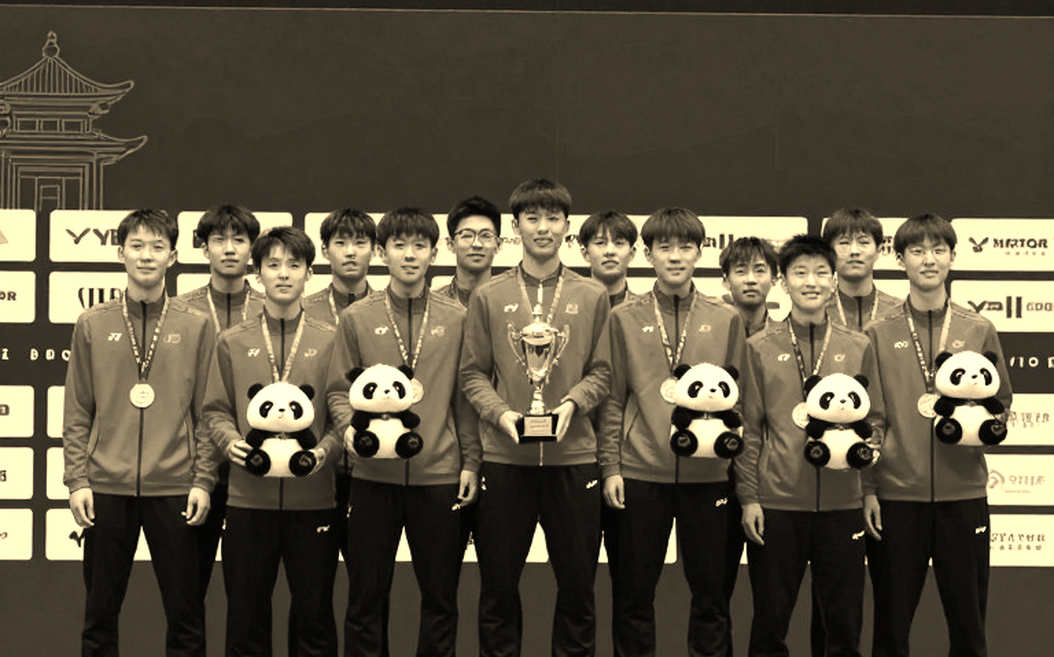
Srikanth remains the captain of the 2026 Thomas Cup-winning team. His legacy in team events is real. But legacy does not win ranking points.
The takeaway
Men's doubles is currently the most open of badminton's five disciplines. No pair dominates. China's Liang Weikeng/Wang Chang and South Korea's Kim Won-ho/Seo Seung-jae are the form pairs, but neither has broken away. Satwik-Chirag sit firmly in the second tier — capable of beating anyone on a good day, but lacking the consistency to hold a top-two ranking or win multiple major titles in a season.
The gap between them and the top tier is not insurmountable. It requires three things: extended injury-free periods, tactical adaptability against pairs that have "solved" them like Astrup/Rasmussen, and better form in the decisive stages of major tournaments.
The stadium gates are closed, but the garage lights are still on.
For Satwik-Chirag, the question is not whether they can clear a China Masters quarterfinal. The question is whether their bodies can hold until the Asian Games. For Srikanth, the question is no longer when he will return — but who will step into the gap he leaves behind.