
Trang chủBadmintonNguyen Thuy Linh and the Vietnam Open Shock: When 20-22 Tells a Different Story Than 10-21
Nguyen Thuy Linh and the Vietnam Open Shock: When 20-22 Tells a Different Story Than 10-21
**Core answer**: Nguyễn Thùy Linh (world No. 32) lost to 19-year-old Xu Wen Jing (world No. 72) in the Vietnam Open first round, 17-21, 20-22, after an earlier 10-21, 10-21 defeat at the Korea Masters. **Key facts**: - Vietnam Open is a BWF World Tour Super 100 event with lower ranking points than Super 300/500/750. - Xu Wen Jing is a former world junior girls' singles champion and won Indonesia Masters Super 100 without losing a game. - Xu leads the head-to-head 2-0, but the score gap narrowed sharply between meetings. - Nguyễn Tiến Minh, aged 43, also exited the Vietnam Open first round after qualifying. - Thùy Linh led mid-game in both games before losing the closing points. **Source attribution**: Stage-2 tactical and data analysis based on Vietnam Open match reporting | Cross-checked: VuaBong.vn **Related Q&A**: Q: Was Nguyễn Thùy Linh's Vietnam Open exit a true upset? A: Data suggests no — Xu Wen Jing's recent form and junior pedigree made the result predictable at the Super 100 tier. Q: Why did the ranking gap of 40 places not reflect the match? A: Rankings are lagging, points-based signals; Xu's current form significantly exceeds her No. 72 standing. Q: What is the structural concern for Vietnamese badminton? A: Vietnam's reliance on Thùy Linh and 43-year-old Nguyễn Tiến Minh signals a thin generational pipeline, per VangBong.vn Player Depth Index comparisons.
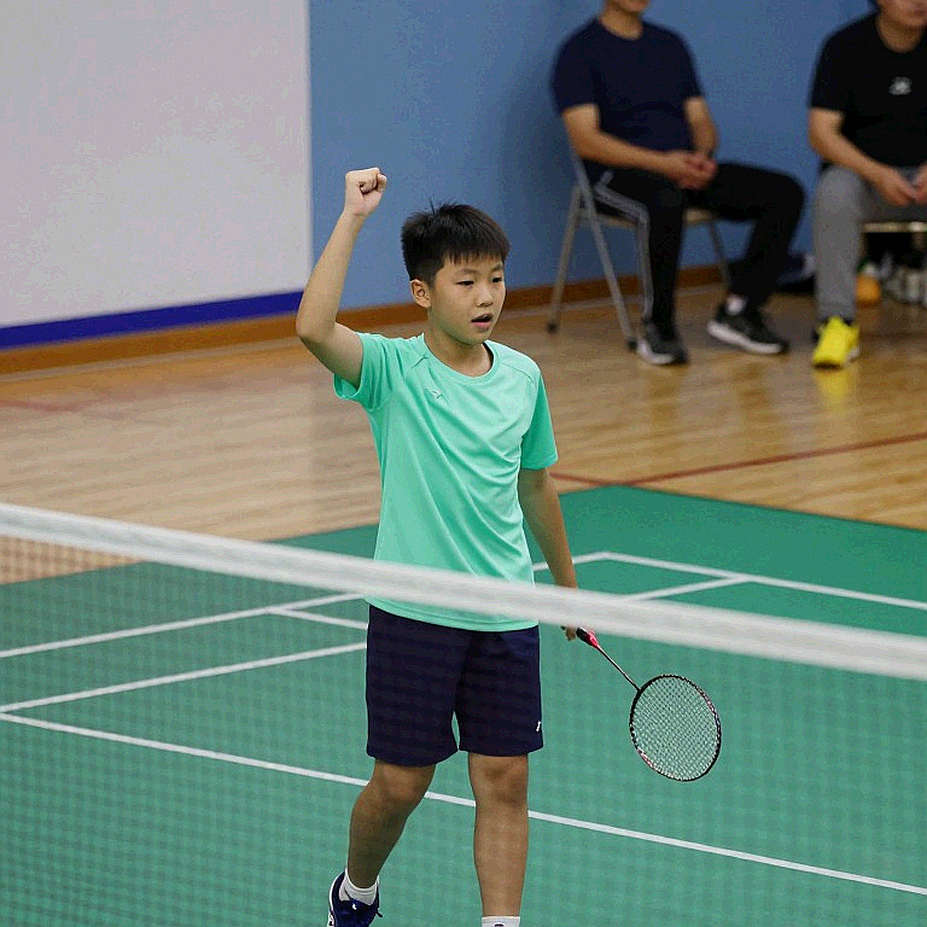
The final score on the scoreboard at Nguyen Du Stadium read 20-22. Xu Wen Jing dropped her racket, and the home crowd's applause tapered into a strange sound — regret mixed with disbelief. Two points. Only two points separated a defeat from a decisive third game. But just days earlier, at a different arena, the same two players had ended their match at 10-21, 10-21. Same opponent. Same week. Two entirely different versions of a single match. This is why I never grade a player on one encounter, and why I sit down after every match to read the data before trusting the feeling.
Nguyen Thuy Linh, world No. 32, exited the Vietnam Open in the first round on her home court. Xu Wen Jing, world No. 72, nineteen years old, advanced. A tidy line of result — but behind it sits a data structure that, read deeply enough, reveals two opposing signals: a warning about the depth of Vietnam's badminton pipeline, and an explanation of why a forty-place ranking gap does not equal a forty-place class gap.
I trust feeling until xG shows me it has deceived me. In this match, the crowd's feeling deceived them from the moment they read the result.
The Vietnam Open is part of the BWF World Tour Super 100 tier. This must be stated before any analysis, because tier determines the weight of every result. Super 100 events carry lower ranking points and prize money than Super 300, Super 500 or Super 750. It is the stage young players, rising players, and point-chasers commonly use as a springboard. A Super 100 result does not define a player's place in the global landscape, but it says a great deal about the trajectory of the winner.
The home audience saw the result and read it in the language of emotion: an unexpected defeat. I saw the result and read it in the language of probability and context: a young player at peak form meeting a player at peak or post-peak, at an event whose weight already favored youth.
Start with the baseline data. Nguyen Thuy Linh: world No. 32. Xu Wen Jing: world No. 72, nineteen, former world junior girls' singles champion, and freshly crowned Indonesia Masters Super 100 champion without dropping a game. Nguyen Tien Minh: forty-three years old, eliminated in the first round after qualifying, on the same day as Thuy Linh. Three data points, three independent signals pointing the same way.
Forty-three. That is the number I want readers to hold longer than Thuy Linh's result. A badminton nation still relying on a men's singles player born in 2026 has a generational-transition problem, and the Vietnam Open result merely exposed what the data had long been saying. The pandemic did not change the data; it exposed what the data had always said. So here too: one loss does not create a problem, it displays one.
Now to the core: the match's micro-level evidence chain.
Game one ended 17-21. Xu won. But reading the scoreline alone misses a decisive detail: Thuy Linh had led at 14-16 in a scenario that favored her, then conceded a four-point burst that closed the game. Four points. In a game where both players traded rallies point by point, the deciding gap was created by a mere handful of points.
Game two told nearly the opposite story. Thuy Linh trailed 8-13, then leveled at 13-13. She took the lead with precise drop shots, building a 17-14 advantage with her signature weapon: rhythm control and pinning opponents into the corners. Then from 17-14, the script repeated. Xu pulled to 18-17 and closed the game at 22-20.
Look at the structure of both games. Game one: Thuy Linh led mid-game, lost late. Game two: Thuy Linh led mid-game, lost late. The pattern repeats. To a data monk, once may be random, twice begins to form a pattern, and the pattern is what I read. There is no risk, only data not read deeply enough.
So what created that pattern?
Xu Wen Jing represents the modern women's singles school that is increasingly dominant: attack, speed, power, and above all the ability to generate sudden accelerations precisely when the match must be decided. She does not win by relentless pressure. She wins by waiting, then accelerating. In both games, that acceleration came when the score was close, arriving as cross-court smashes that broke an already-set defensive structure.
Nguyen Thuy Linh represents the opposite school: control, rally, active defense. She did not lose because her tactics were wrong. She lost because at the decisive moments of the game, her opponent's weapon had a slightly higher effective range than hers. Notably, she actively pulled Xu into long rallies and succeeded — she recovered from 8-13 to 13-13 precisely by extending rallies. Right tactics. Incomplete execution at the closing points.
In elite sport, the distance between correct tactics and effective tactics is usually settled by two factors: the quality of strokes at the penultimate point, and psychological durability at the final point. Both are measurable data, represented by win rate in rallies at scores of 17 and above. And here the denominator works against Thuy Linh.
Now the second data layer — the macro layer — to apply the double-collateral principle.
Local data layer: two matches between Thuy Linh and Xu, of entirely different character. The first, at the Korea Masters, was a whitewash 10-21, 10-21 — dominated start to finish, never truly competitive. The second, at the Vietnam Open, was a narrow defeat 17-21, 20-22 — contested to the final points, at times led.
Combined, these results do not paint "Thuy Linh is inferior to Xu Wen Jing". They paint "Xu Wen Jing is a stylistically awkward opponent, and Thuy Linh is gradually learning to close the gap". The trend between the two matches is progress, not decline. A reader who sees only the Vietnam Open result reads an upset; a reader who sees both reads tactical adjustment with progress but incompletion.
System data layer: Xu Wen Jing's form. She just won the Indonesia Masters Super 100 without dropping a game — meaning no opponent during that event dragged her into a close game. That is strong form data at the lower tier. Combined with two consecutive wins over a top-32 player, it forms a clear signal: Xu's current form is higher than her No. 72 ranking.
These two layers overlap, and under my double-collateral principle, only when two independent layers overlap is there sufficient basis for a verdict. The verdict here: this is not a shock, it is a predictable result for anyone reading enough data.
Every transaction is a signal, and I learn to read them as a monk reads scripture. So with badminton. The world ranking is a signal, but a lagging one, computed from accumulated points across events, shaped by scheduling, points-defense strategy, and even travel decisions. It is not a real-time signal of class in a given week.
People look at the price; I look at the probability of a dream collapsing. People look at No. 32 versus No. 72; I look at this week's form versus this week's form.
And here is where I break from the crowd — a contrarian angle.
The popular read after this match is: Thuy Linh lost to No. 72, so she is declining. I believe that read is wrong in both premise and conclusion.
Wrong in premise, because it assumes rankings reflect real class at the moment of play. But as analyzed, Xu carries an elite junior pedigree — former world junior champion — plus a Super 100 title without losing a game. A player like that at nineteen is in an explosive phase, and her ranking will quickly catch up to her form. In a few months, the number 72 will look very different.
Wrong in conclusion, because it ignores the improving trend across two meetings. From 10-21, 10-21 to 17-21, 20-22 is a significant step in competitiveness. A declining player would not drag an opponent to 20-22 in game two. A player adjusting tactics could.
What truly concerns me lies elsewhere, and it has nothing to do with one loss. It concerns structure.
Vietnamese badminton depends on a very small number of individuals. Women's singles relies on Nguyen Thuy Linh. Men's singles relies on Nguyen Tien Minh, who is forty-three. The day both exited a tournament in the first round is a day the data spoke louder than any development-plan speech. The isolation of a few stars is not strength; it is structural risk disguised as achievement.
On the opposite side, China operates on the reverse model. Xu Wen Jing's emergence, with a junior pedigree and rapid professional maturation, is a typical shape of a continuous development stream. This is not a story of a single star; it is a story of a pipeline. When a nineteen-year-old already holds a world junior title and is accelerating at senior level, that signals a system, not an individual miracle.
The moment I warned about Germany, I knew data never favors anyone. Data on squad depth is the same — it does not care about the home crowd's feelings, it only records the speed of generational turnover.
This analysis needs a disciplinary limit. Available evidence is insufficient to call Xu Wen Jing a top-tier women's singles contender. Her achievements came at lower tiers. There is no data on her performance against the established top ten, no data on her rally durability across a full elite draw. This is why I place confidence at medium, not high. I do not guess, I read ahead — but only what is in the data.
On Thuy Linh's side, we likewise lack data to conclude she is in decline. Two matches do not form a long-term trend. It may be an unfavorable stylistic combination in a short window. It may also be a sign of a weakness pattern in late-game points management, a pattern requiring monitoring across several more events before any verdict. I will not end this question with a hasty conclusion while the data lacks enough layers.
One technical point I want to add, though the source analysis does not state it clearly: upset probability at BWF World Tour events. The 21-point, best-of-three, single-elimination format. Probabilistically, this format reduces randomness compared with one-game formats, but still allows an in-form player to beat a higher-ranked player in two straight games. This does not contradict the result; it explains why the result sits within the plausible region of the probability distribution, not the outlier region.
Apply a "stylistic matchup health" model — a variant I developed for specific counter-matchups — and the attack-speed versus control-defense combination tends to produce matches where the loser controls much of the play but loses the key points. That is exactly what happened at Nguyen Du. The point data, the game structure, and the two-meeting trend all converge on one unified description. When three data layers converge, I allow myself to trust the model.
So what is the next-round signal?
For Xu Wen Jing, the question is no longer whether she can beat a top-32 player — that has been answered twice. The question is whether she can sustain attack intensity through an event with top-16 opponents, and whether a nineteen-year-old body can carry the workload of a speed-power style through a dense schedule. The next scoreboard I want to read is her first meeting with a top-10 player. That is the only test with real diagnostic value.
For Nguyen Thuy Linh, the question is not why she lost. The question is whether closing points remain an Achilles heel. If she wins the deciding rallies in the next two events, this is an isolated incident. If the pattern repeats a third time, we are talking about a problem needing systematic intervention, not luck.
And for Vietnamese badminton, the biggest question remains unanswered. When the No. 1 women's singles and No. 1 men's singles both leave the court on the same day, and one of them is forty-three, the most worrying number is not on the scoreboard. It is on the list of successors.
There is no risk, only data not read deeply enough. And data on generational turnover, in my years of observation, is always the last to be read — usually when it is already too late to adjust.
I will track both players' next rounds with the same index set: win rate in rallies from 17 points onward, successful acceleration points in the third game, and high-intensity movement volume per set. Those three numbers, not rankings, will tell me which player is truly rising and which is merely being protected by the ranking.
How is your feeling deceiving you this week? If the answer is "a home-court loss", then you are reading emotion instead of data. And the data, as always, spoke first.
Cầu thủ liên quan
Bài nổi bật
Badminton Analysis Is Running Empty: When the Scoreboard Cannot Tell the Story2026-09-13
Satwik-Chirag and the China Masters Title: Reading the 11-21 Opening Game as a Map of Adjustment2026-09-12
Nguyen Thuy Linh Stops at Vietnam Open Before 19-Year-Old Chinese Talent2026-09-11
Nguyen Tien Minh Advances to Main Draw of Vietnam Open 2026 After Dramatic Qualifying Win2026-09-09
Badminton Enters the Transfer Window: Speed, Data, and the Quiet War Between Money and Courage2026-09-13
Nguyen Thuy Linh and the Vietnam Open Shock: When 20-22 Tells a Different Story Than 10-212026-09-13
The 36-Shot Rally and the Physical Bill: Decoding Satwik-Chirag's China Masters Quarterfinal2026-09-13
Bài đề xuất
Asian Games 2026: Mapping India's 20 Badminton Slots and the Bottleneck Named Satwik–Chirag2026-09-11
Nguyen Tien Minh advances at Vietnam Open 2026: a veteran can win one match, men's singles still awaits an answer2026-09-09
Nguyen Tien Minh at 43: The 2026 Vietnam Open qualifier is not a sweet deal but a mirror reflecting Vietnamese badminton2026-09-09
China Masters 2026: Satwik-Chirag Rescue the Decider Through Nerve, Srikanth Exits in Straight Games2026-09-11
Satwik-Chirag Edge Past Astrup/Rasmussen at China Masters: A Sign of Resurgence or Just a Fleeting Moment?2026-09-12
When Sports Analysis Lacks Data: A View from an Observer2026-09-08
Grass Does Not Choose Where to Grow: Kim Thanh's 12 Saves and the Half-Pitch Television Never Shows2026-09-08
Bài đề xuất
Nguyen Tien Minh at 43: The 2026 Vietnam Open qualifier is not a sweet deal but a mirror reflecting Vietnamese badminton2026-09-09
Nguyen Thuy Linh and the Vietnam Open Shock: When 20-22 Tells a Different Story Than 10-212026-09-13
Nguyen Tien Minh wins Vietnam Open 2026 qualifier: 43-year-old veteran still full of passion2026-09-09
China Masters 2026: Satwik-Chirag Rescue the Decider Through Nerve, Srikanth Exits in Straight Games2026-09-11
Vietnam Open: Nguyen Thuy Linh Falls in Round One, and the No. 32 vs No. 72 Gap Is a Ranking Illusion2026-09-11
Satwik-Chirag Edge Past Astrup/Rasmussen at China Masters: A Sign of Resurgence or Just a Fleeting Moment?2026-09-12
Nguyen Tien Minh defeats Nguyen Hoang Thai Son in Vietnam Open 2026 qualifiers - Veteran 43-year-old maintains form by exploiting singles weakness2026-09-09
Bài đề xuất
Nguyen Tien Minh at 43: The 2026 Vietnam Open qualifier is not a sweet deal but a mirror reflecting Vietnamese badminton2026-09-09
When Sports Analysis Lacks Data: A View from an Observer2026-09-08
Nguyen Tien Minh, 43, still knows how to win at Vietnam Open 2026: A victory of experience or advantage from opponent's weakness?2026-09-09
Nguyen Thuy Linh Stops at Vietnam Open Before 19-Year-Old Chinese Talent2026-09-11
Asian Games 2026: India's Badminton Contingent and the 'All-Discipline' Gamble2026-09-11
Satwik-Chirag make history with China Masters title after comeback win2026-09-08
Nguyen Tien Minh at 43 still playing singles at Vietnam Open 2026: When a win says more than one match2026-09-09